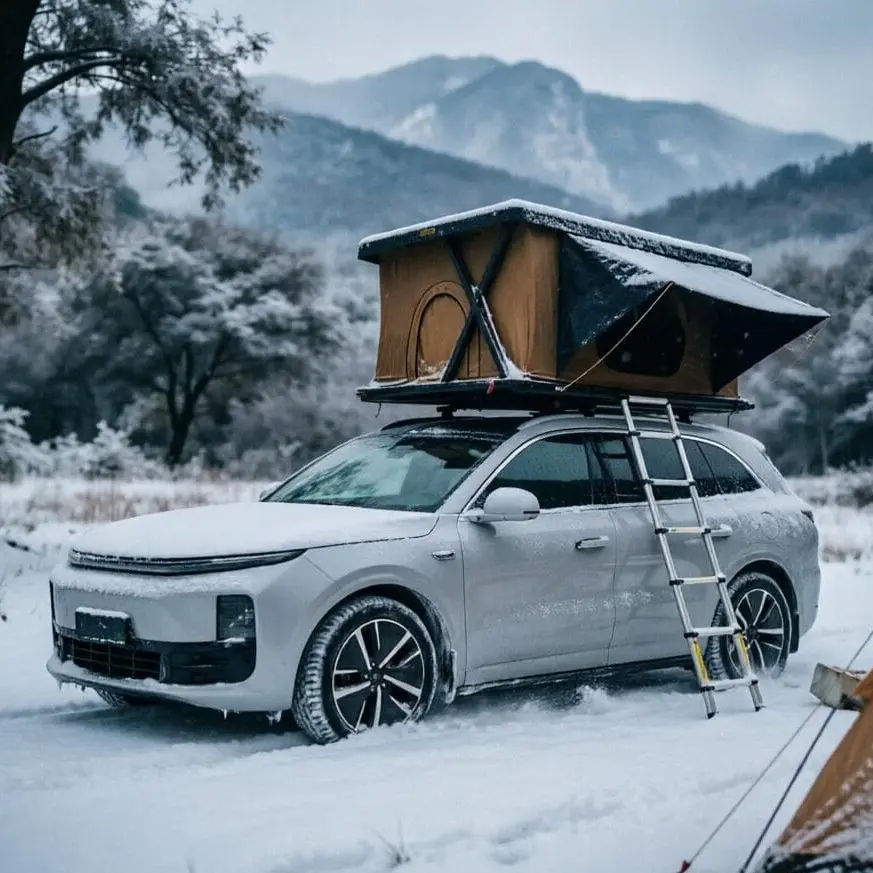
6 Key Considerations for B2B Rooftop Tent Procurement in Australia (with SPORTGUST Solutions)
Introduction
Australia has one of the world’s most mature 4WD, camping and overlanding cultures. However, a clear shift is now underway: the market is moving away from traditional soft‑shell rooftop tents and accelerating toward hard‑shell designs. Better aerodynamics, faster setup, superior weather protection, and longer durability are driving this change – and the pace has picked up noticeably over the past 12–18 months.
SPORTGUST has been a hard‑shell specialist from day one. We don’t make soft‑shell tents. Every product we build uses an aluminium honeycomb shell – rigid, lightweight, and purpose‑built for the tough Australian environment.
Whether you run a coastal caravan park, manage a fleet of Toyota HiLux or Ford Ranger hire vehicles, or source products for an outdoor brand, choosing the right hard‑shell rooftop tent involves far more than just “a place to sleep”.
This article looks at real‑world pain points for Australian B2B buyers. We break down six key areas and compare different technical approaches – so you can make an informed decision for your business.
1. Corrosion Resistance – the hidden killer of coastal Australia
Why it matters in Australia: Long coastlines mean constant salt spray; the outback throws up fine dust that wears down hardware fast.
The B2B problem:
- Rusted screws, hinges, ladder brackets → safety risks, guest complaints
- Frequent hardware replacement → higher maintenance costs and spare parts inventory
Material comparison:
| Material type | Typical brands | Corrosion resistance | Best for |
|---|---|---|---|
| Ordinary zinc‑plated steel | Some low‑cost imports | Moderate | Short‑term, inland use |
| 304 stainless (SPORTGUST standard) | SPORTGUST | Good | Inland / occasional coastal |
| 316 marine‑grade stainless (optional) | SPORTGUST (custom) | Excellent | Coastal sites, islands, high‑salt exposure |
SPORTGUST’s approach:
- All models come standard with 304 stainless hardware.
- For Australian coastal clients we offer 316 marine‑grade stainless as an option.
- The aluminium‑honeycomb shell does not corrode – no ageing issues like ABS or fibreglass.
2. UV Protection – how Australian sun destroys ordinary fabrics
Why it matters: UV levels in Australia are among the highest on earth. Standard tent fabrics can become brittle, fade, and lose waterproofing in 1–2 years.
The B2B problem:
- Fabric breakdown → leaks, tears → poor guest experience
- Short replacement cycles → higher long‑term costs
What’s available:
- Most brands do not publish a UV rating.
- SPORTGUST rates all its fabrics UV50+.
SPORTGUST’s approach:
- 280g polyester with PU coating, UV50+ certified
- Waterproof rating 3000mm, SBS zippers, silicone‑taped seams
- Designed to last much longer under Australian sun
3. Open/Close Cycles & Durability – a critical metric for rental fleets
Why it matters: Campervan and 4WD hire tents are opened and closed multiple times every day – during peak season possibly 10+ times per day. Gas struts, hinges and zippers must survive this punishment.
The B2B problem:
- Strut failure → customer can’t use the tent → bad reviews
- Repairs take time and tie up spare stock
What’s available:
- Most brands do not publish gas strut test data.
- SPORTGUST publishes its test result: 60,000 cycles.
Real‑world calculation (at 10 cycles per day, typical for busy rental fleets):
- 60,000 cycles ÷ 10/day = 6,000 days
- ÷ 365 ≈ 16.4 years of daily use
SPORTGUST’s approach:
- All models use gas struts tested to 60,000 cycles
- Backed by a 5‑year frame waterproof warranty (ISR7003 adhesive, same grade used on high‑speed rail)
- Provides B2B customers with verifiable, quantifiable reliability data
4. Closed Height & Vehicle Fit – working with Australia’s favourite vehicles
Why it matters: The most popular vehicles here are dual‑cab utes – HiLux, Ranger, Triton. They often need to fit under carports, underground car parks, or vehicle ferries.
The B2B problem:
- Fat closed height → won’t fit into common parking spaces or ferries
- More wind drag → higher fuel bills for your fleet
Design comparison:
| Closure style | Closed height | Typical models | Drag impact |
|---|---|---|---|
| Traditional “shoe‑box” (lid overlaps base) | 24–33.5 cm | Most ABS / fibreglass tents | Higher |
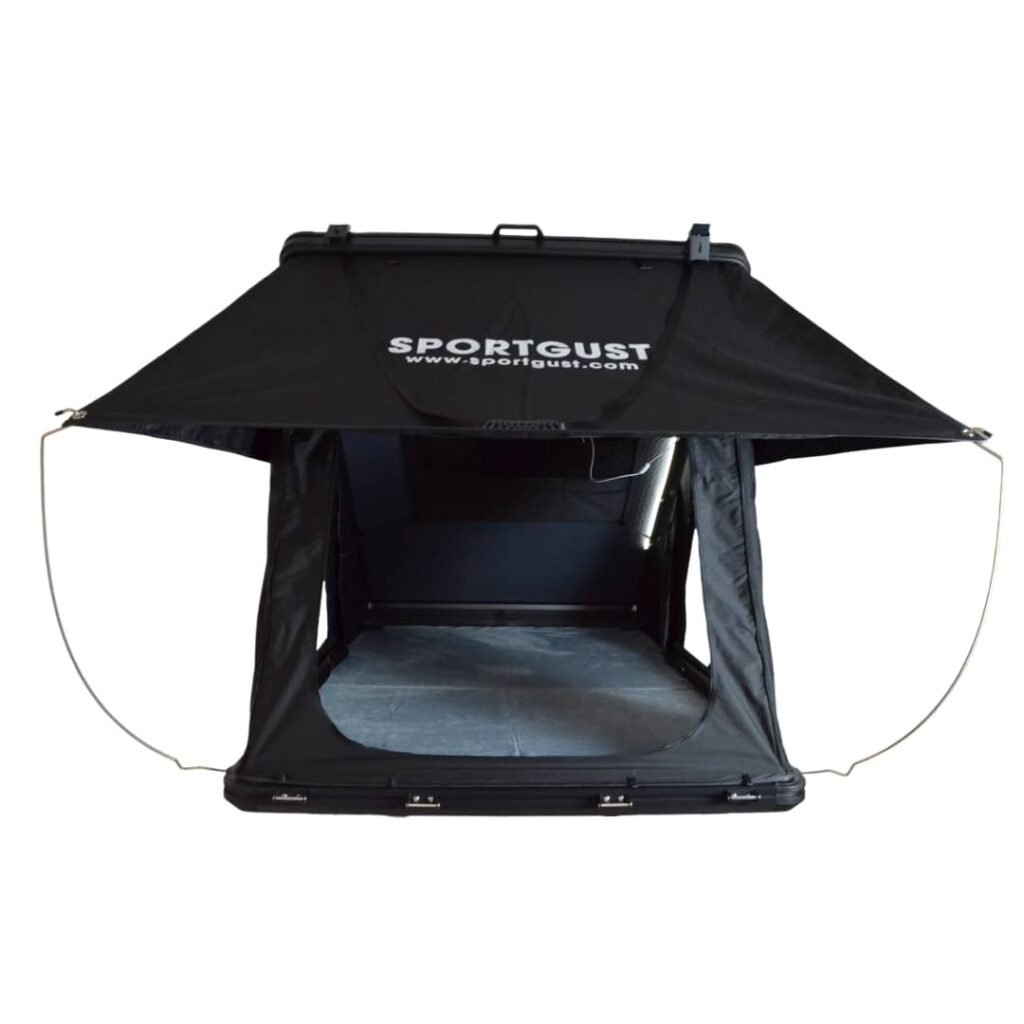
| Clamshell (top & bottom meet edge‑to‑edge) | 18 cm | SPORTGUST hard‑shell models | Lower |
SPORTGUST’s approach:
- Consistent 18 cm closed height across the whole range
- Slips neatly under height‑restricted areas and reduces fuel consumption
5. Bulk Purchase Cost – total cost of ownership (TCO), not just the ticket price
Why it matters: Serious B2B buyers look at TCO: purchase price + freight + duties + maintenance + spares + depreciation. Big international brands (like ARB) charge a premium but offer trust; cheap imports often have hidden long‑term costs.
The B2B problem:
- Big‑brand pricing makes fleet‑scale buying expensive
- Cheap imports come with poor after‑sales support and unpredictable reliability
SPORTGUST’s approach:
- FOB USD $580–702 (2.0 size, 40‑unit MOQ) – MODEL T 2.0 is the most popular in Australia
- Roughly 1/6 the retail price of comparable Western brands in Australia
- 5‑year warranty lowers long‑term risk and replacement cost
- Container loading data supplied – makes logistics planning easy
Market context – popular Australian brands
Brands like ARB, DARCHE and 23ZERO are widely recognised in the Australian market. They sell good products and have earned strong reputations. However, their pricing is typically at the premium end, and customisation options (colours, logos, small batch orders) are often limited or come with long lead times.
For many B2B buyers – especially caravan parks, rental fleets and smaller brands – those constraints create a gap in the market. That’s where SPORTGUST fits: the same hard‑shell quality, fully customisable, at roughly one‑sixth of the price.
Popular MODEL T series pricing (Australia‑focused) :
| Size | MODEL T price (USD) | Mattress width |
|---|---|---|
| T 1.0 Solo | $638 | 100 cm |
| T 2.0 Standard | $580 | 120 cm |
| T 2.5 Family | $638 | 135 cm |
| T 3.0 Max | $702 | 150 cm |
*Cross bars optional +$50 per set.*
MODEL A/AS (wedge‑style) is also available for those who prefer that design, but MODEL T has proven to be the preferred choice among Australian buyers.
Modular range: SPORTGUST covers everything from 1.0 (solo, 100cm mattress) to 3.0 (family, 150cm mattress). One supply chain, consistent quality, no need to mix brands.
6. Safety Design – the hidden risk of side‑fold (wedge) tents
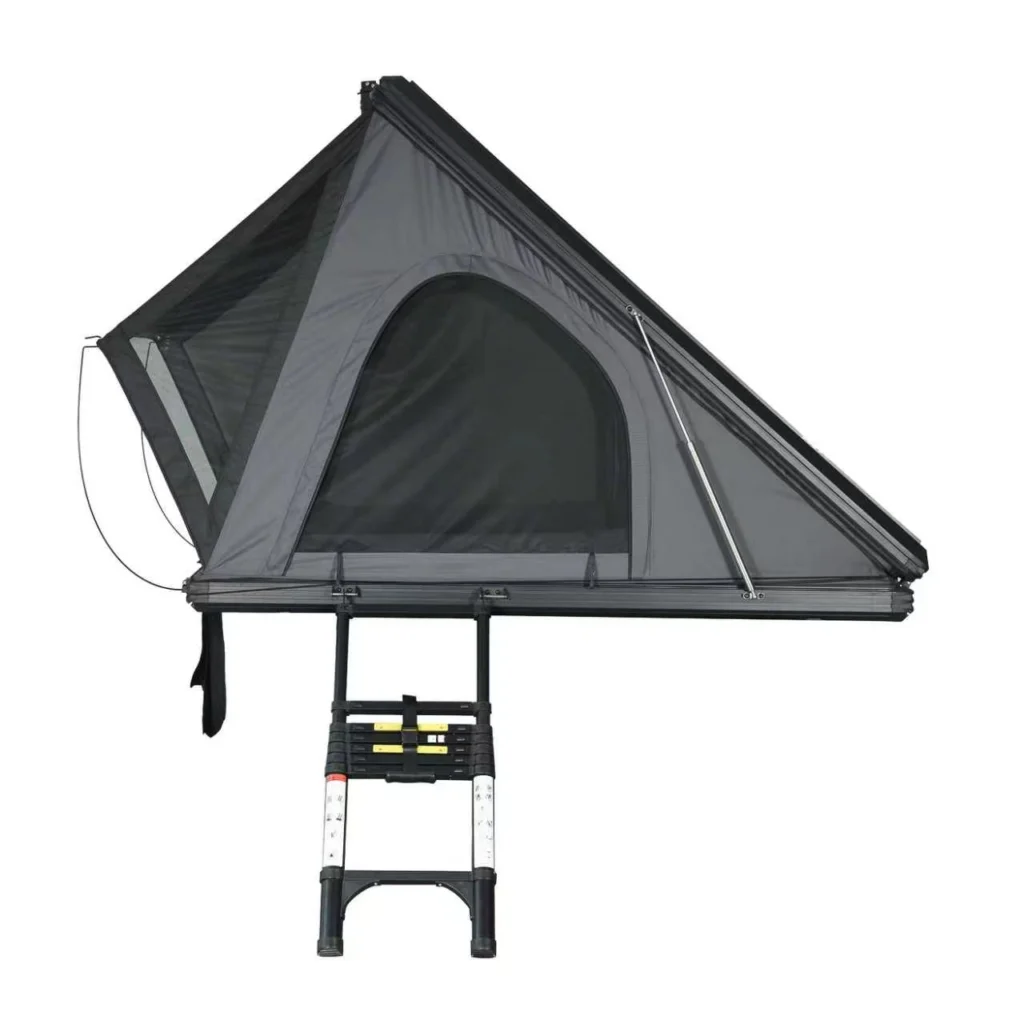
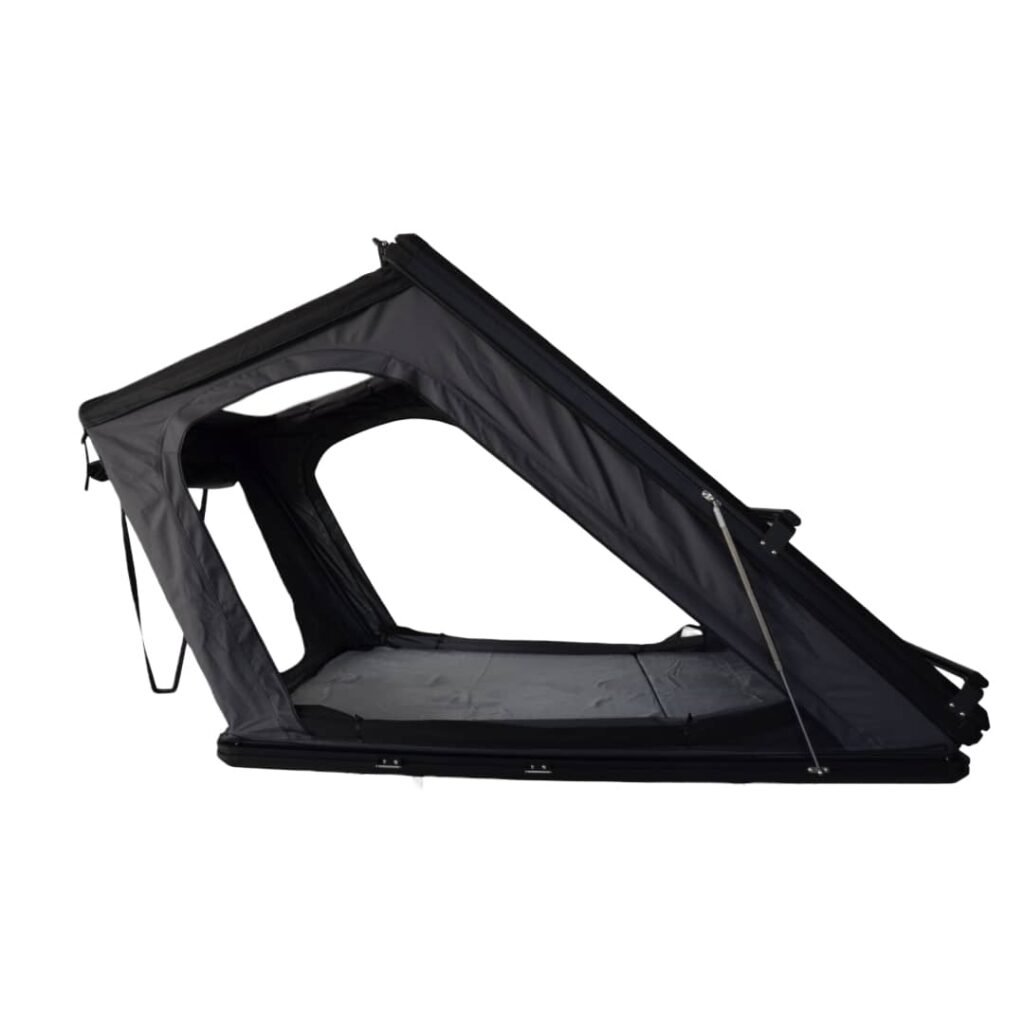
Market reality: Some wedge‑style or side‑fold tents use the ladder as a structural support. Once opened, part of the tent’s weight and the forces from climbing are transferred directly into the ladder.
The B2B problem:
- If the ladder slips or is not locked properly → the tent can tilt, tear, or even snap in half
- In rental fleets, customers are often unfamiliar with the setup – higher risk of misuse
- Even when properly set, each use requires careful ladder angle adjustment, which takes time and invites error
Design comparison:
| Tent type | Ladder role | Structural risk | Typical brands |
|---|---|---|---|
| Side‑fold / wedge | Ladder acts as a load‑bearing support | Ladder slip → tent can break | Some Roofnest, iKamper models |
| SPORTGUST clamshell (MODEL T) | Ladder is only for access – tent structure is self‑supporting | Ladder slip does not affect tent integrity | SPORTGUST MODEL T |
SPORTGUST’s approach:
- The tent’s hinge and independent frame carry all the weight
- The ladder is purely for climbing up and down – it takes zero structural load
- Even if the ladder slips, wobbles, or is missing, the tent remains fully intact
- Simple, fool‑proof ladder attachment – no tricky angle adjustments
Why this matters for B2B buyers:
- Reduces damage caused by customer mistakes → fewer repairs and warranty claims
- Less reliance on a perfectly set ladder → lower spare‑parts inventory
- Better hire experience – guests don’t need to learn a complex support setup
Conclusion: SPORTGUST – hard‑shell experts for the Australian transition
Australia is moving from soft‑shell to hard‑shell rooftop tents, and the shift is accelerating. SPORTGUST has always been a hard‑shell specialist – we don’t make soft tents. Our entire production is focused on aluminium‑honeycomb hard shells, designed from the ground up for the tough Australian environment.
For Australian buyers, the MODEL T series is the proven favourite. It combines all the technical advantages that matter here:
| Your pain point | SPORTGUST MODEL T – hard‑shell solution |
|---|---|
| Coastal corrosion | Standard 304 stainless; optional 316 marine‑grade stainless |
| Harsh UV | UV50+ fabric |
| High open/close frequency | Gas struts 60,000‑cycle tested (≈16.4 years at 10x/day) |
| Warranty confidence | 5‑year frame waterproof warranty with ISR7003 adhesive |
| Vehicle fit & fuel cost | 18 cm closed height – lowest in its class |
| Bulk purchase value | Roughly 1/6 the price of comparable Western brands |
| Size flexibility | True modular range from 1.0 (100cm) to 3.0 (150cm) |
| Safety design | Clamshell construction – ladder is not a load‑bearing part, no side‑fold breaking risk |
| Customisation | 200+ colours, logos, fabric options, insulation kits, 316 hardware |
If you’re looking for a long‑term, reliable hard‑shell rooftop tent supplier for your caravan park, rental fleet, or brand – get in touch. We’ll provide samples and bulk pricing.
👉 Contact SPORTGUST for B2B pricing & customisation
👉 Explore MODEL T series – Australia’s favourite hard‑shell
👉 Explore MODEL A/AS series (wedge‑style hard‑shell)
Based on industry analysis and manufacturer specifications as of May 2025. Actual purchases subject to direct communication. SPORTGUST reserves the right to update product specifications.