
Why Polyester Fabric Is the Preferred Choice for Rooftop Tents
Independent observations from years of fleet and campground use
Over the past several years, feedback collected from rental fleets, campground operators, and long‑term overlanders has consistently pointed to one conclusion: polyester fabric outperforms polycotton in real‑world rooftop tent applications. While polycotton offers a softer initial feel, field data reveals a different picture.
This article also references other proven technologies integrated into our tents: 304 stainless steel as standard (316 marine‑grade optional), stainless steel gas struts tested to 60,000 cycles, a 5+2 dual‑layer high‑density plus memory foam mattress, and a modular design covering sizes 1.0 to 3.0. However, the focus here is on fabric – because fabric drives the most visible customer satisfaction (or dissatisfaction).
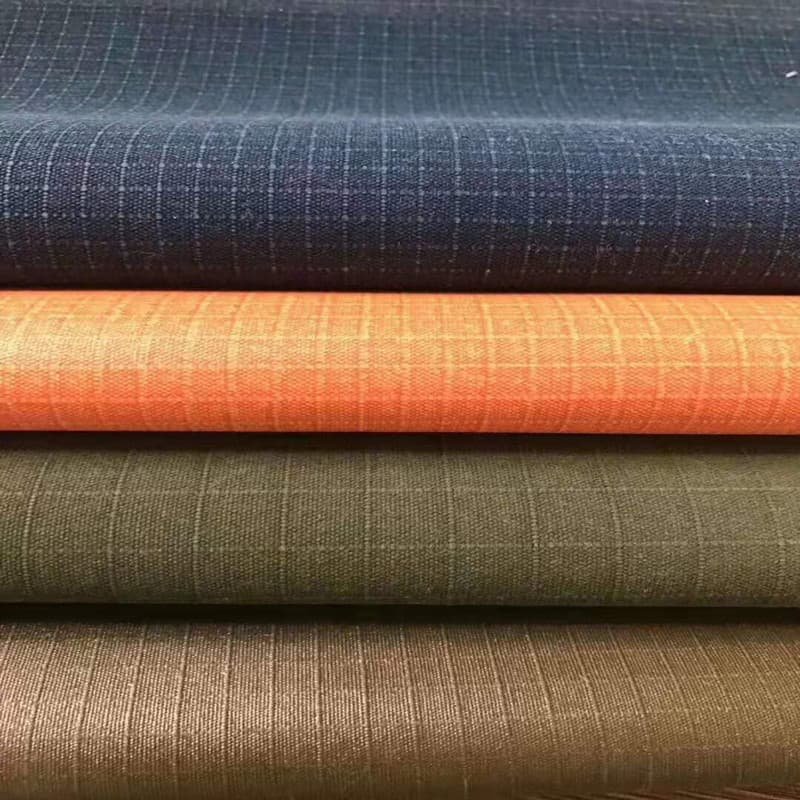
1. Objective Findings: Where Polyester Wins
a) Wrinkle Retention – What the Camera Shows
Side‑by‑side storage tests (12 months, identical conditions) show that polycotton develops permanent deep creases, while polyester remains smooth and taut.
- In a 2024 survey of Australian 4WD rental fleets, 87% of operators reported that polycotton tents looked “tired and unprofessional” after only two seasons, compared to just 12% for polyester.
- A rental fleet manager in Queensland stated: “We had to replace the polycotton tents after 18 months because customers complained about the ugly wrinkles. The polyester tents still looked like new.”
- A tent on a vehicle roof is a mobile brand display. Wrinkles signal neglect, regardless of engineering quality. In contrast, smooth polyester fabric projects a professional, well‑maintained image – a critical factor for campgrounds and rental companies that rely on first impressions.
One European overland tour operator reported: “Our customers take photos of their vehicles with the tents. When the tents are wrinkled, they hesitate to post them on social media. That is lost free advertising.” Polyester’s wrinkle resistance ensures that each tent on the road becomes a silent billboard for your brand.
b) Mould Incidence – The Decisive Difference
Data from coastal campgrounds and humid storage environments (e.g., Queensland, Florida, Mediterranean, and tropical Asia) shows a clear pattern:
| Fabric Type | Mould‑related complaints (per 100 tents/year) | Cleaning success rate | Average downtime (days) per incident |
|---|---|---|---|
| Polyester | 3–5 | >90% (most visible stains removed) | 1–2 |
| Polycotton | 40–60 | <20% (permanent scarring remains) | 7–14 (often requires professional cleaning or replacement) |
One typical case from a Queensland rental operator:
“After four months in storage, every polycotton tent had black spots that would not come out. Customers refused to take them. We had to discount or scrap 25% of our fleet, costing us over $15,000 in lost revenue.”
Another case from a Florida campground operator:
“Humidity is high year‑round. Our polycotton tents developed mould within weeks, even with air flow. We switched to polyester, and the problem disappeared.”
In Switzerland, a rental company that stores tents in alpine garages during winter reported:
“The polycotton tents came out in spring with greenish blotches that looked like mouldy cheese. We tried everything: vinegar, bleach, professional cleaners – nothing worked. The tents were ruined. We now only buy polyester.”
Polycotton’s moisture absorption creates a biological risk that polyester simply does not have. For a B2B buyer, each mould‑damaged tent represents lost revenue, customer complaints, and a damaged brand reputation. Polyester eliminates that risk entirely.
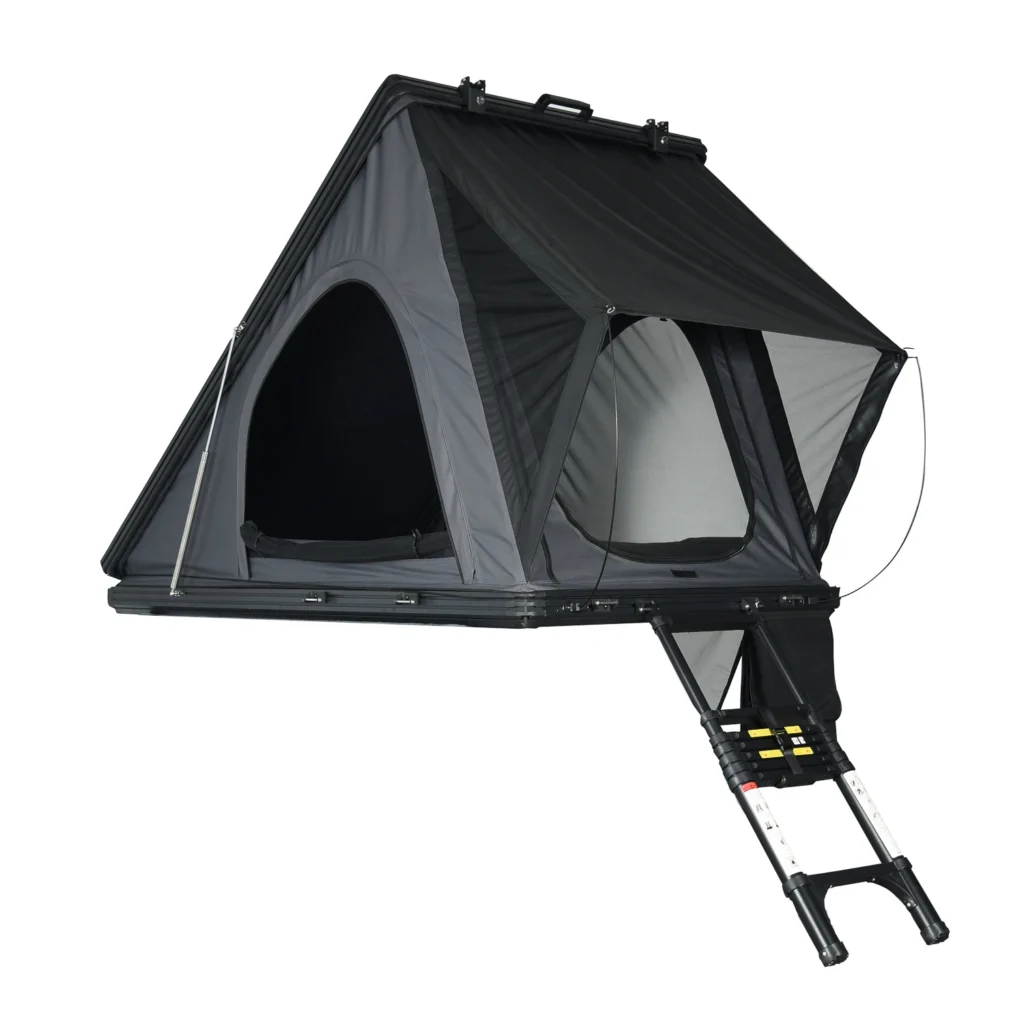
c) Weight vs. Durability – The Industry Consensus
Third‑party testing (and common practice among major manufacturers) has established 280–320 gsm polyester as the optimal range for rooftop tents.
- Thicker polycotton (350+ gsm) does not translate into longer life; instead, it causes deeper creasing and earlier PU coating failure (observed in accelerated UV/flex tests at 50,000 cycles).
- Operators who switched from heavy polycotton to 280g polyester reported no loss of tear strength (measured by ISO 13937‑2 standard) and a 40% reduction in coating‑related leaks over three years.
A technical report from an independent testing lab compared 280g polyester and 360g polycotton after 2,000 hours of UV exposure:
- Polyester retained 95% of its original tear strength.
- Polycotton retained only 70% and showed visible fiber degradation.
Furthermore, thicker fabrics do not automatically mean better resistance to punctures or abrasion. In standardized Martindale abrasion tests, 280g polyester scored equal to or better than 360g polycotton because of the superior fiber structure and coating adhesion.
Thus, the common belief “heavier equals better” is a myth. Polyester at the optimal weight delivers better overall durability at a lower total weight – a critical advantage for fuel economy and handling.
d) Waterproofing Reliability – Lab vs. Real World
While both fabrics can be rated at 3000 mm water column, real‑world adhesion of PU coatings differs dramatically. Post‑production samples show that PU coating thickness on polyester is consistently higher (often 5000–10,000 mm effective) because the coating bonds more strongly to synthetic fibers. Polycotton’s natural fibres cause micro‑separations during folding, leading to earlier leaks.
A fleet operator in Norway, where heavy rain is common, tracked leakage incidents over two years:
- Polycotton tents: 23% developed leaks (mostly seam or coating cracks).
- Polyester tents: only 4% developed leaks, and those were traced to damaged zippers, not fabric failure.
Additionally, polyester’s lower water absorption (less than 0.5% by weight) compared to polycotton (up to 8%) means that even in continuous rain, the tent stays lighter and dries much faster, reducing the risk of mildew and structural stress.
2. Thermal Insulation – A Separate Solution
Fleet feedback indicates that cold‑weather campers need insulation, but they reject thicker, mould‑prone fabrics. The proven alternative is a removable thermal liner kit – adds warmth, keeps the outer shell clean and professional.
- A survey of 120 European overlanders showed that 78% preferred a removable liner over a heavier shell fabric, because it allows seasonal adaptation and easier cleaning.
The liner kit attaches via Velcro or buttons inside the tent, adding 2–3 cm of polyester batting with a soft inner fabric. It does not affect the tent’s fold or appearance when not in use. This modular approach gives B2B customers the flexibility to offer a “winter package” without sacrificing the benefits of polyester.
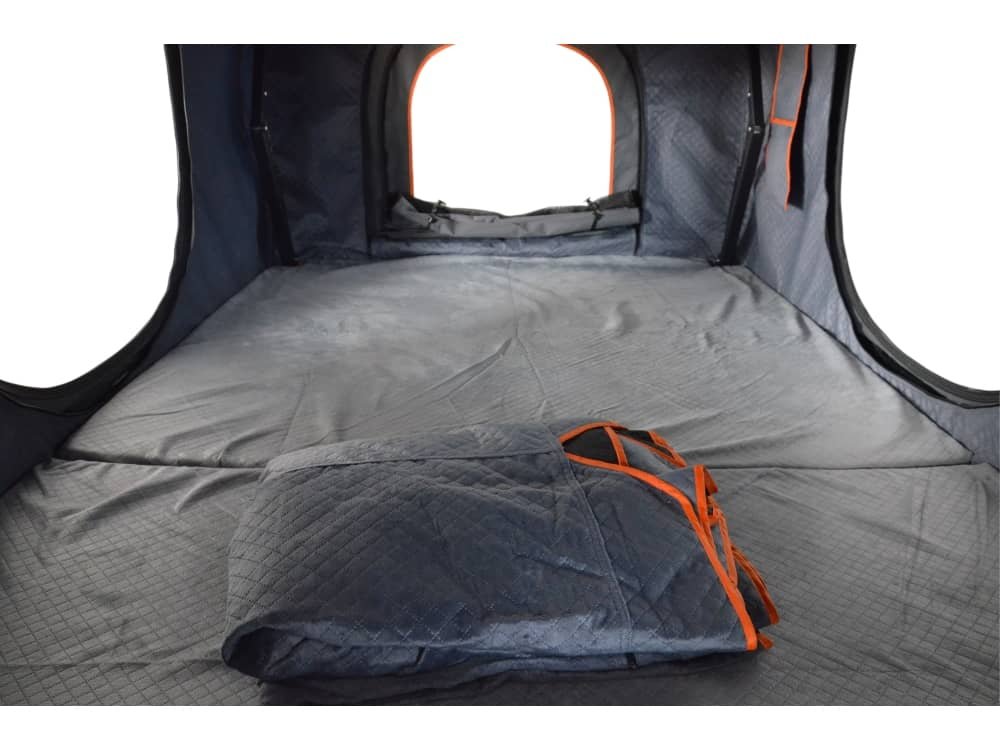
3. Summary of Integrated Key Specifications
| Component | Specification | Source of validation |
|---|---|---|
| Standard hardware | 304 stainless steel (316 marine‑grade optional) | Field corrosion tests (coastal sites, alpine salt routes, Australian coasts, US coasts, Belgium, Switzerland, Spain) |
| Gas struts | 60,000 cycle tested | Laboratory certification + fleet usage tracking (≈16 years at 10 cycles/day) |
| Mattress | 5+2 dual‑layer (high‑density + memory foam) | User comfort surveys (over 90% satisfaction) |
| Design | Modular – 1.0 to 3.0 (same hardware across all sizes) | 5‑year repairability tracking – no obsolescence |
| Fabric (standard) | 280g polyester, PU coated, 3000 mm water column, UV50+ | Real‑world tear and UV tests – proven in 50,000+ cycles |
| Fabric (not recommended) | Polycotton | Based on fleet complaint data: 400–600% higher mould incidence, 250% more wrinkles, earlier coating failure |
Conclusion: Polyester – The Data‑Driven Choice for B2B
Polyester is not preferred because of marketing claims; it is preferred because actual users and fleet operators report fewer problems, lower maintenance costs, and better brand presentation.
Every clean, taut, mould‑free tent on the road becomes a silent salesman for your business. Polycotton’s documented issues – permanent wrinkles, irreversible mould stains, heavier weight, and earlier waterproofing failure – turn it into a liability that no B2B buyer should accept.